
Diversity is not a policy. It is the practice of sharing power.
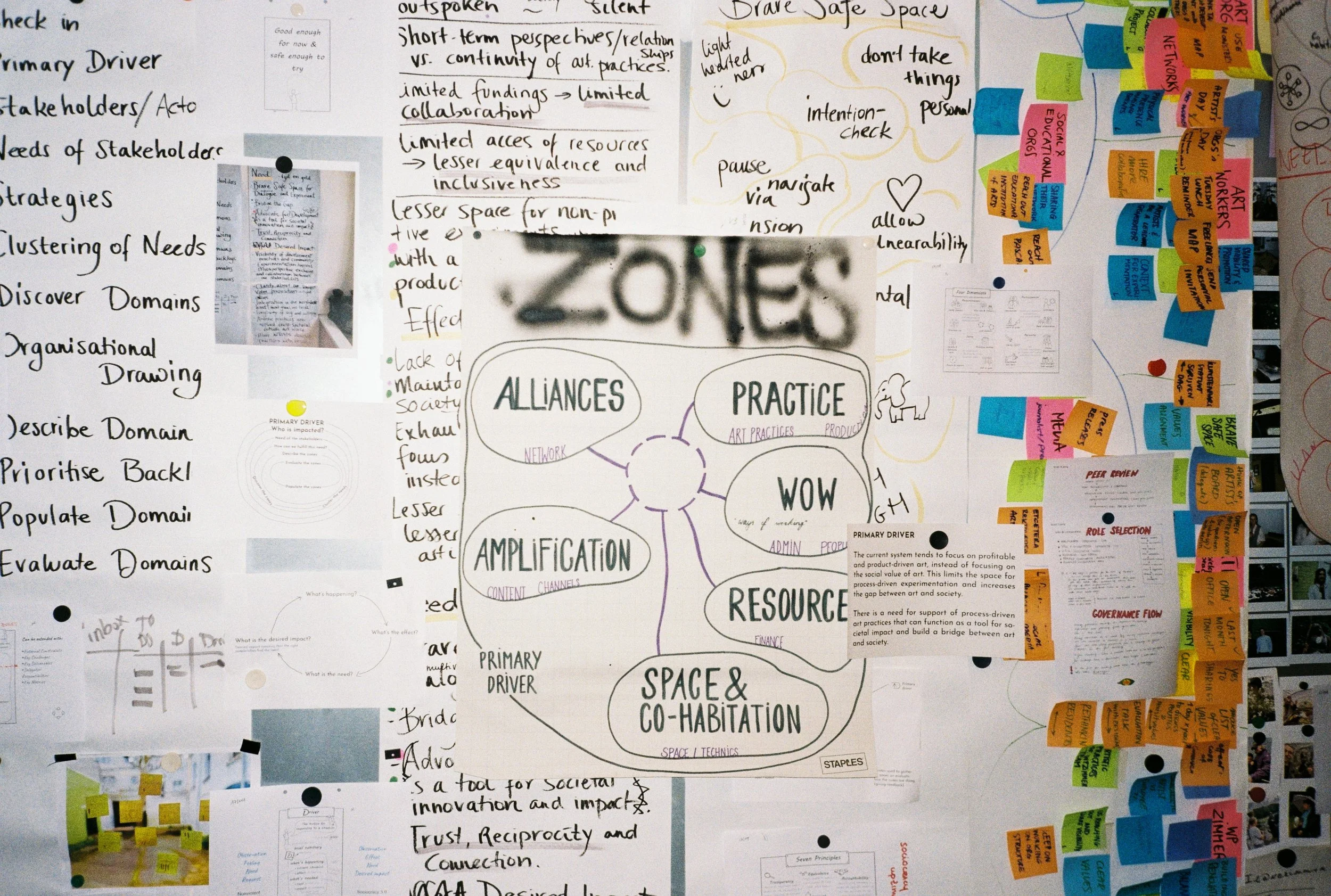
How do you truly shape diversity within an organisation?
This important question from Pulse is the reason for the interview written by Hannie Van den Bilcke you can read below.
Pulse was a Flemish network organisation focused on sustainability. Over the past 15 years, its role has been to connect, support, inform, raise awareness and inspire around 1,000 organisations and individuals in the culture, youth and media sectors on the theme of sustainability. As its support came to an end, sadly, this is one of its last contributions. I am very grateful to be able to share this story, together with the passionate Marie Luyten.
At WpZimmer, an international arts centre in Antwerp, there was a growing awareness that the values they stand for artistically – research, collaboration and multi-vocality – were not always sufficiently manifested in their internal operations.
Together with organisational coach Dette van Zeeland from Golven Maken ~ Making Waves, the team developed a sociocratic organisational model that now guides their daily practice. Sociocracy 3.0 not only brought a new organisational structure, but above all an equivalent and effective way of decision-making, meeting and sharing responsibility. A way that keeps the organisation constantly in motion.
A different way of working
wpZimmers mission is to offer artists and art workers space for research, experimentation and development. Pluralism has been part of this for years, but in practice it proved difficult to truly bring this value to life.
Decisions too often fell on the shoulders of one person, the flow of information stalled and joint decision-making proved unworkable. The team asked itself two honest questions:nbsp; What is wpzimmers potential to be a multi-vocal organisation and what is needed to make that possible in a sustainable way?
The answer revealed three conditions:
Space (defined time and attention alongside colleagues part-time work to experiment and work on the organisation itself),
Knowledge (insights into other forms of organisation),
Skills (a coach who could help move from intention to practice).
Thus, in 2023, they began their transition towards an organisation in which shared leadership and ownership are truly alive.
A process of learning, designing and adjusting
wpZimmer first delved into the subject matter itself through conversations with coaches and books such as Reinventing Organisations by Frederic Laloux. At a Pulse event, they came into contact with Alena Capova from Muntuit, an organisation that works with Sociocracy 3.0 and is guided in this by Dette van Zeeland, founder of Golven Maken-Making Waves. Sociocracy 3.0 and Dettes working method also proved to be a good fit for wpZimmer.
The team deliberately chose a coach who is also active outside the cultural sector, because the challenges surrounding governance and trust are universal.Dette brought a toolbox, but above all an attitude: starting from collective needs, navigating through tensions and thus giving meaning together.
wpZimmer took on an incredible amount of ownership,’ says Dette. ‘They didn’t want a ready-made solution, but wanted to build it themselves. That was a wonderful experience.’
2024: the design phase
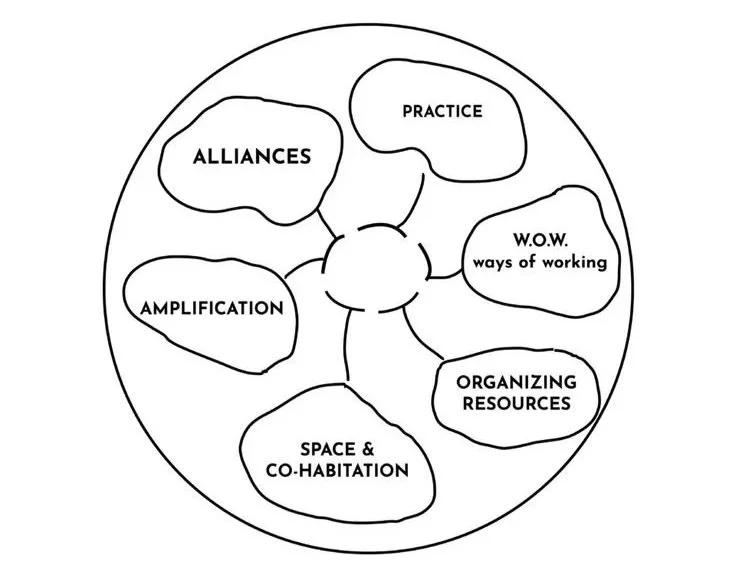
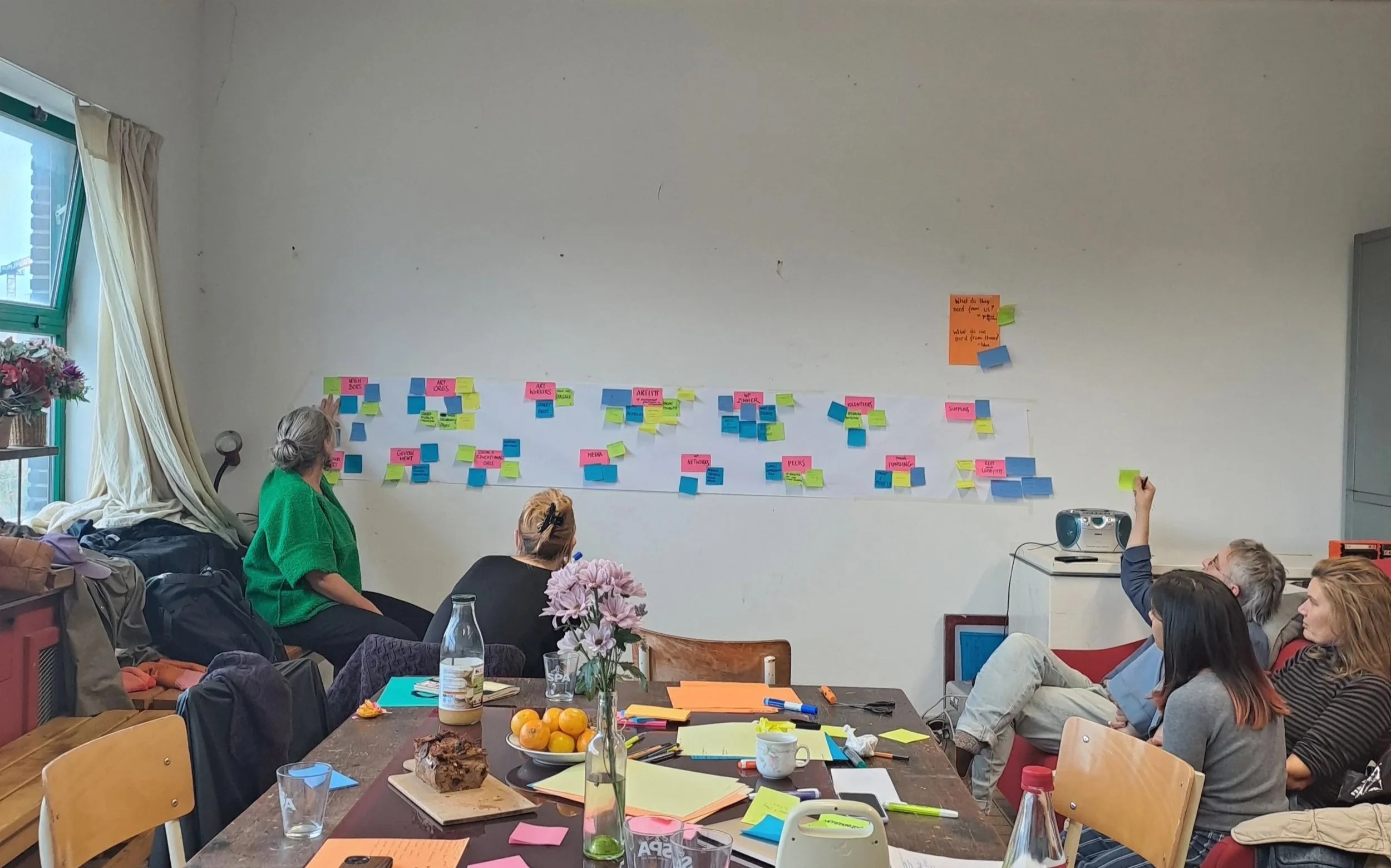
In various sessions, the team developed a new organisational structure in which team members in newly formed zones (work areas or domains) respond to the most important organisational needs, aided by mutual feedback and influence.
From this new perspective, the classic functions gave way to a different way of organising. No longer was thinking based on fixed roles, but on the needs of the whole. The organisational chart now consists of zones with clearly defined responsibilities and autonomy. The team divides itself across these zones, jointly assumes the necessary responsibilities and manages the resources allocated to each zone: space, budget, people, communication channels, artistic practices, and so on.
‘The breakthrough came when we realised that evolution itself is the goal,’ says Marie. ‘We dont have to be finished. We can keep moving and learning.’
2025: the implementation phase
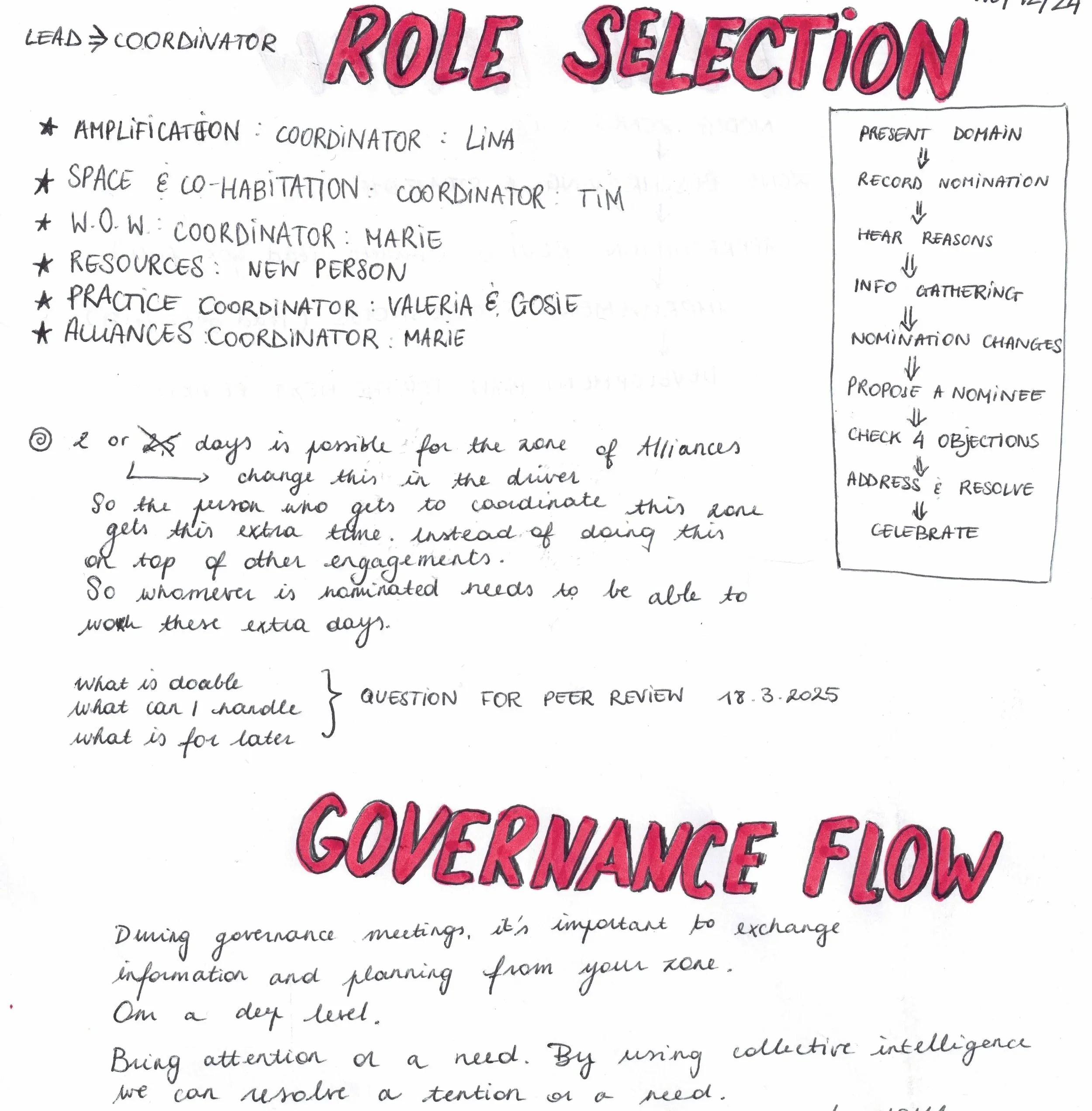
In 2025, wpZimmer really started working according to the new self-governing model. Since then, meetings have been based on consent decision-making: no one has to agree completely, as long as there are no valid objections. In fact, the team consciously looks for possible objections to strengthen proposals and listens carefully to concerns that may lie beneath the surface.
In addition, the team organises strategic meetings to respond to new and changing needs. These governance meetings also serve to introduce tensions, look ahead strategically together and make maximum use of collective wisdom. This is done, among other things, by regularly evaluating each zone through peer reviews.
An additional point of attention was the language used within the organisation. At wpZimmer, everyone speaks English, but it is not anyones mother tongue. This made it even more important to pay attention to word usage and meaning. Moreover, Sociocracy 3.0 brings its own jargon (think of concepts such as objections, tensions and needs) that you have to master as an organisation. Learning this language became part of the transition process.
‘We discovered that we were not only creating a new structure,’ says Marie, ‘but also a new way of talking to each other.’
An organisation in evolution
The change at wpZimmer is not one big revolution, but a series of small shifts that together form a new culture. Information now flows more smoothly, responsibilities are clearer and decisions feel supported. Team members spontaneously take on new roles, dare to give feedback and no longer see tensions as obstacles but as learning opportunities.
This clarity and shared responsibility also create more strategic peace of mind.
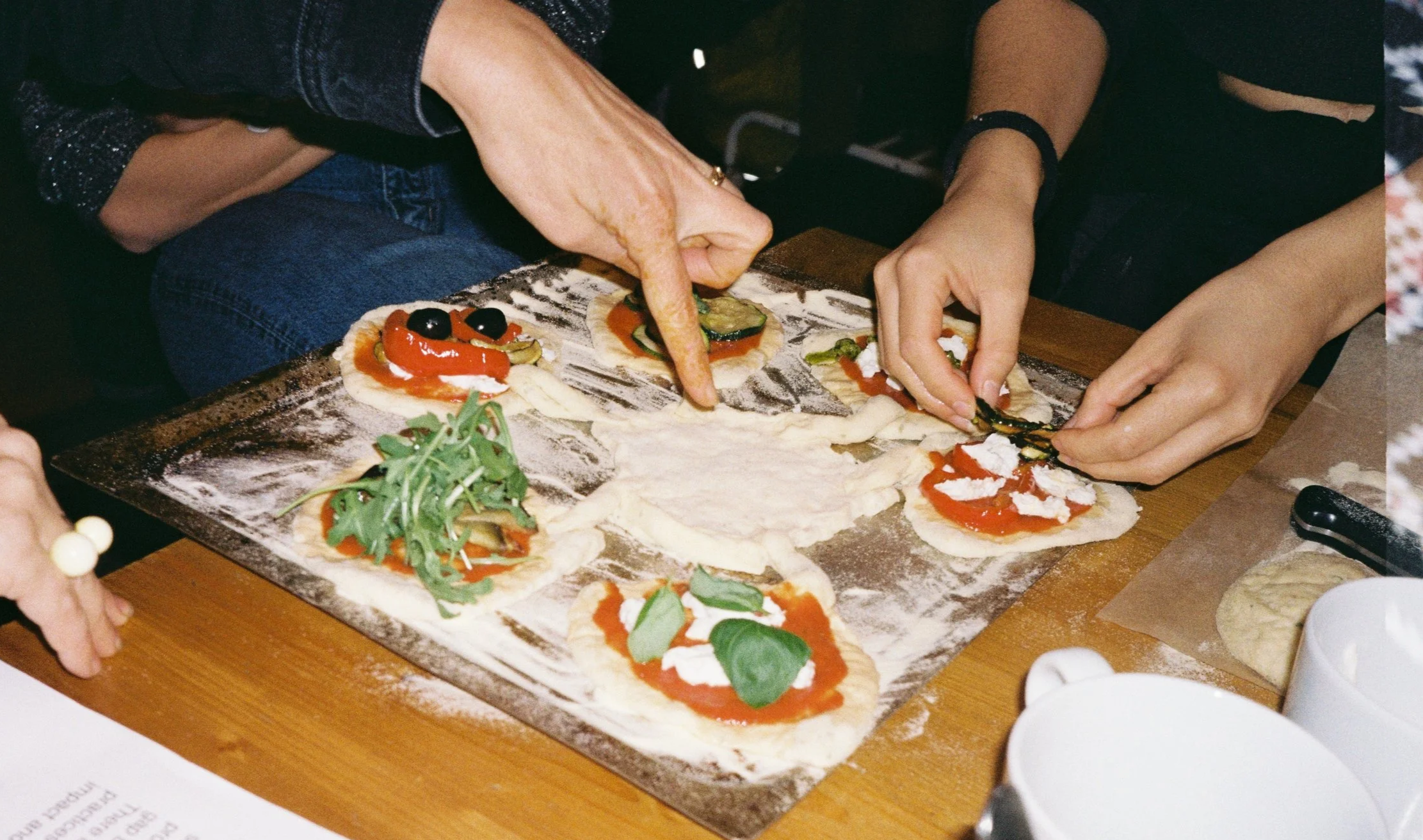
‘We now have a solid foundation for writing new dossiers and articulating our vision clearly,’ says Marie. This even translates into their rituals. During their annual pizza party, the new organisational chart was transformed into a pizza and stick-on tattoos. ‘That moment,’ laughs Marie, ‘showed that we had not only built a model, but also a team that dares to play.’
The new working method is also seeping through to artists and partners. wpZimmer openly shares the methodology with others, so that their organisational practice itself becomes an artistic practice: a continuous exercise in listening, navigating and adjusting.
Three valuable insights
Evolution is the goal, not the end point.
The organisation continues to adapt to new insights and needs. By embracing change as a constant, wpZimmer remains a living and learning system.
Multi-vocality requires security and language.
In a multilingual context, it proved important to find words together for needs, emotions and values. By acknowledging tensions and searching for words together, a culture is created in which difference is not threatening but enriching.
External guidance brings a different perspective.
By working with an outsider, the team gained insight into patterns that were difficult to see from within. A coach brings language, structure and distance, without taking away ownership.
Thank you so much for this collaboration ❤️