
Mixing the ancient and the new. A ritual for a team of the European Institutions.
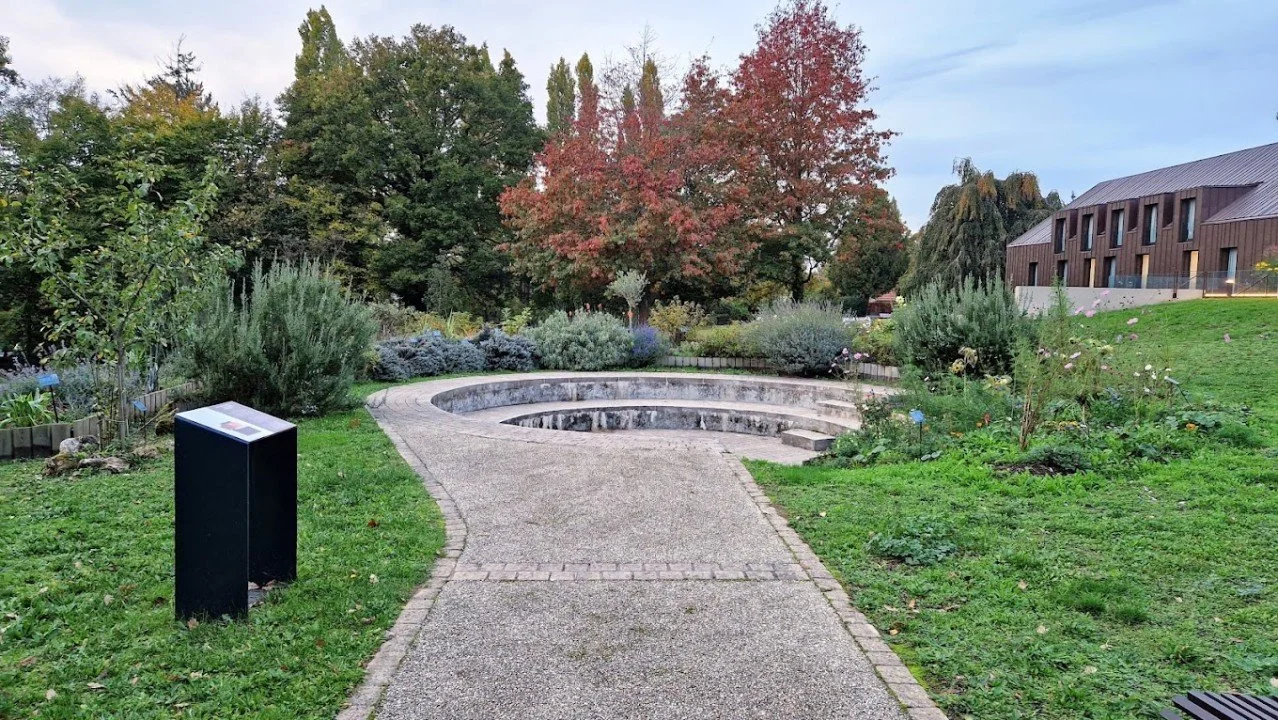
‘Dear friends, we gather here, in a circle, in a very important place, in this amphitheater, surrounded by the powerful herbs, flowers and plants of all the different states of the European union. Surrounded by planted trees that each represent beautiful unifying intentions for Europe. A place where one man, Jean Monnet, had an idea. An idea to unify us, the people of Europe, over the borders of our different tribes, over the frontiers of our states, to work together, to collaborate, just as we want to, as a team. May the persistence of this man be our inspiration.
We stand here before you, in the birthplace of Europe, to give birth to and to embrace the new form we will take as a team, the new roles we will adopt, the new purpose we will commit to. We are here together, to enhance our connection as a team, to feel unity and belonging and to create and enhance trust between us.’
These words formed the opening speech that I gave during the closing ritual that this team had devised and carried out under my leadership, at the end of a three-day team building trip.
In this ritual we honored the past and showed respect for the legacy, for those who came before us, those who came first and those who are no longer with us. We entered the ritual in the order in which the team members joined the team and the European institutions.
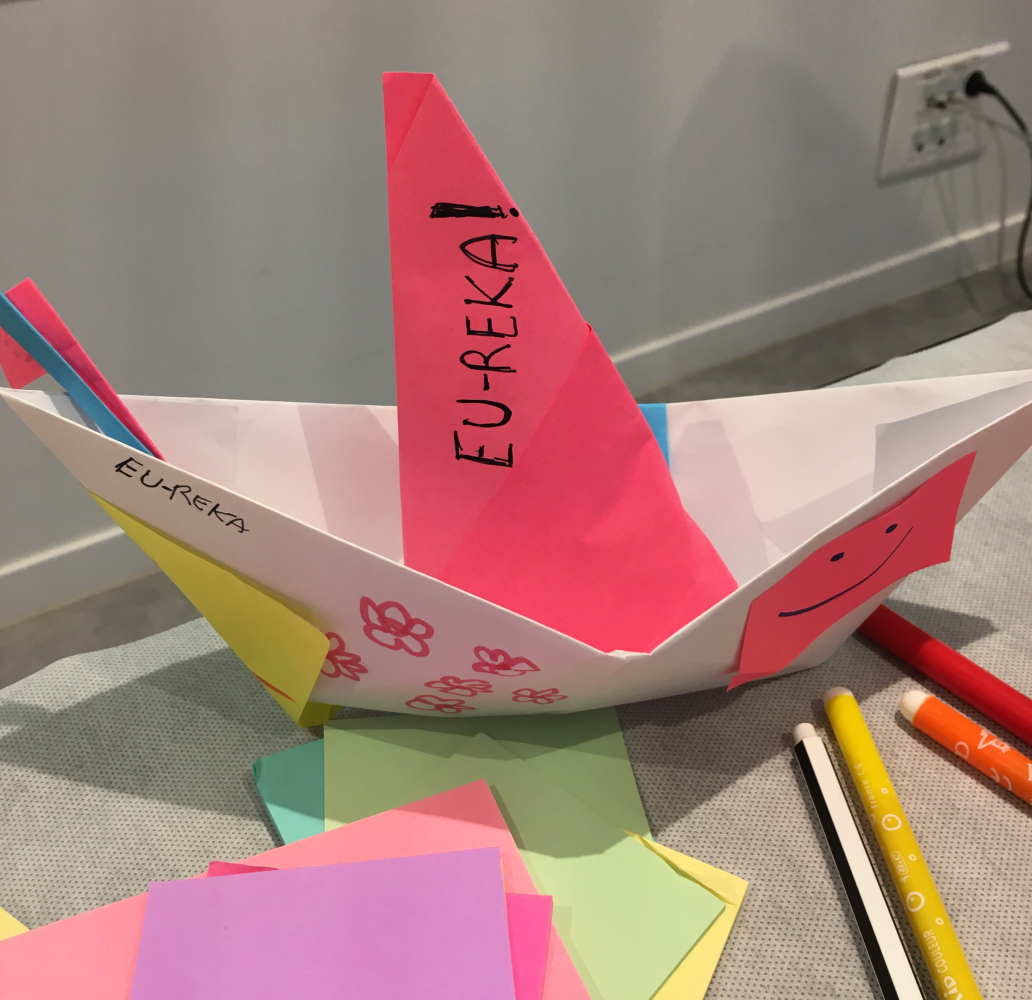
In the days before, during a creative challenge around the team's purpose, a boat was made. A boat that visualizes the future, the way forward. Each took a piece of paper and a pen to write down their intention for the coming change. As the boat passed through everyone's hands, each expressed their intention and added it to this boat, to cherish and keep close.
'Now we step into the new and embrace the blank page. We put our trust in it, we give each other strength and we will remember this moment as the moment we made a promise to each other, to support each other, to ask for help when we need it, to reach out to each other when it is difficult, to accept our differences and give the best to whatever comes, to welcome and embrace the uncertainty, the new and the discomfort of the change that lies ahead,” I continued.
Then, a sheet of paper with a tree with branches and roots, representing the team members, was presented and placed in the center of the circle. In sequence, team members stepped forward to anchor with their fingerprints what was said and expressed, filling the tree with their commitment. A beautiful souvenir that would also be digitized, because the change is about digital transformation. A result that emerged from and built on a wonderful Deep Democracy debate about 'Loving Paper versus Loving Digital'.
That debate honored the old way of working, for it brought to light the love and attachment that people still feel for the craftsmanship of working with paper. But it also paved the way to embrace the new, digital way of working, because it provided many insights into everything that is now possible.
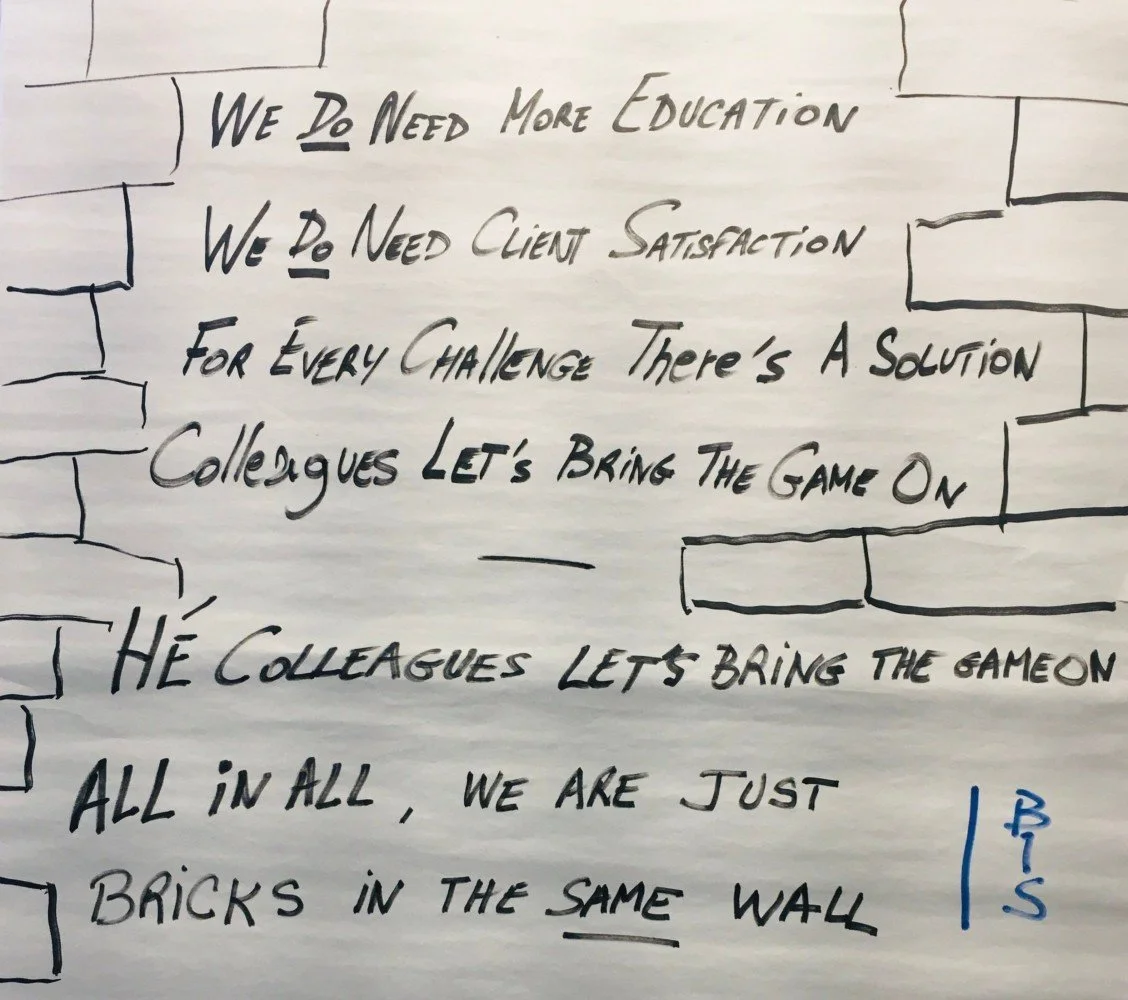
After some other ritual actions, we concluded with a singalong for the new team song, a special version of Pink Floyd's 'The Wall'. The winning contribution to the creative challenge we had on the first day.
How come this group embarked on a ritual so far outside their comfort zone, even with eyegazing and holding hands? A group of which some members had not yet met each other in person, both due to the Corona pandemic and because it is divided and located in different countries. How come they came into such alignment, while the resistance to the transformation beforehand was very great and this seemed impossible?
This is due to the use of methods that are fully in line with Jean Monnet's vision and the goal of a united Europe. I am so grateful that, as a transformation coach from Golfen Maken, I can introduce the great effectiveness of methods such as Sociocracy 3.0, Deep Democracy and Connecting Communication in a place like this, and within the European Union, and show how they can be used one by one. making use of all the collective intelligence and potential present in the group. Because hearing all voices, integrating different perspectives in a respectful, mature way creates true shared leadership and ownership, along with trust, understanding and alignment.
Perhaps the best part is that the philosophy behind these methods or social technologies comes from indigenous and ancient wisdom that we can all agree with. Such as the principle of Both and More; seeing the truth in the opposite perspective. Or Good Enough for Now, Safe Enough to Try, which means if it's good enough for the group, it doesn't have to be exactly my way. Or I am another you and the philosophy of Ubuntu, I am because we are. Sociocracy means 'we as a group, we govern ourselves'. When you see a group committed to mastering the agile practices of consent decision-making, co-creating domain descriptions, forming proposals and driver statements, you see shared governance and shared leadership happening.
But it's even simpler than that. The principle of making rounds, of coming together in a circle, is at the basis of it. Seeing everyone from head to toe and hearing everyone's voice is exactly how the native tribes would do it. For me it is so important to connect with ancient wisdom, to re-appropriate it, remember it and integrate it back into our own systems. To remember and make us feel that we can be wise people is what we need now.
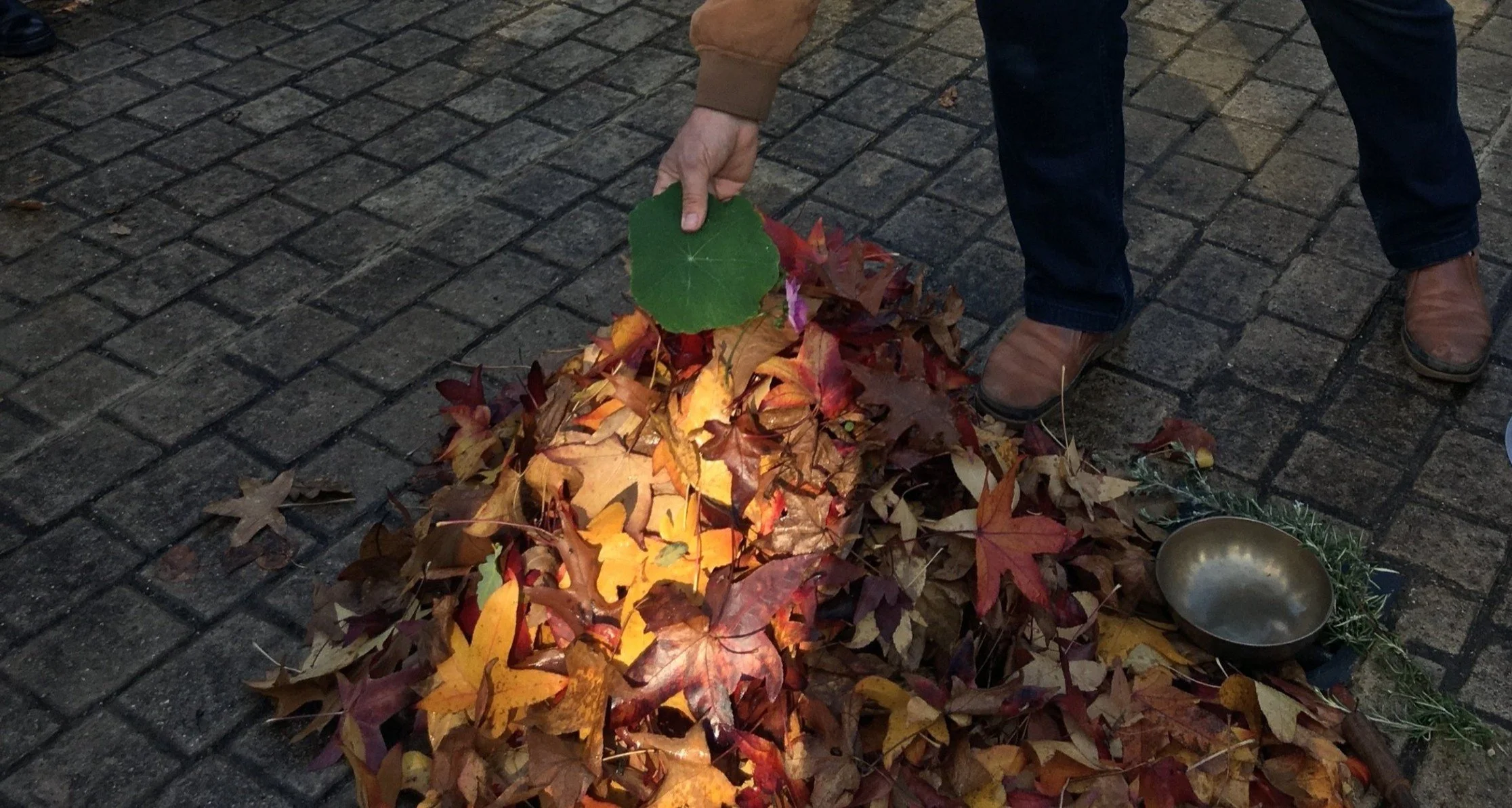
So, in addition to the beauty of methods that create greater consciousness in a group and promote collaboration, I bring ancient ritual practices and rituals into organizations, to connect with source and life energy. I share the principles of the Way of Council as if we were sitting around a campfire. I invite them to write a Kasàlà for each other, just as traditional people in Africa use this form of name poetry to honor life in another being. And I invite them to create a unique ritual together, to anchor, deepen and mark this special journey, just as I do in many organizations and communities. I feel so blessed to be able to pass on this knowledge.
In the late evening of the third day, when I finally got back to Antwerp, I rushed to a sold-out concert by Xavier Rudd, who was playing in the most beautiful music hall in Antwerp, De Roma. Xavier is an Australian artist who strives for unity in the world. Dancing to the lyrics of Ball And Chain I felt that these lyrics says it all:
‘Wisdom from the old school, mixed up with the new school, to make up brand new colours, to paint the walls of change’.
Two months later I meet the head of the unit again, together with a small delegation from the team, to take a look back. They never thought beforehand that they would go through such a ritual with colleagues, but it was a positive experience. Over the past period, the entire team has come together under the now framed work of art, and the mutual atmosphere and connection have greatly improved.